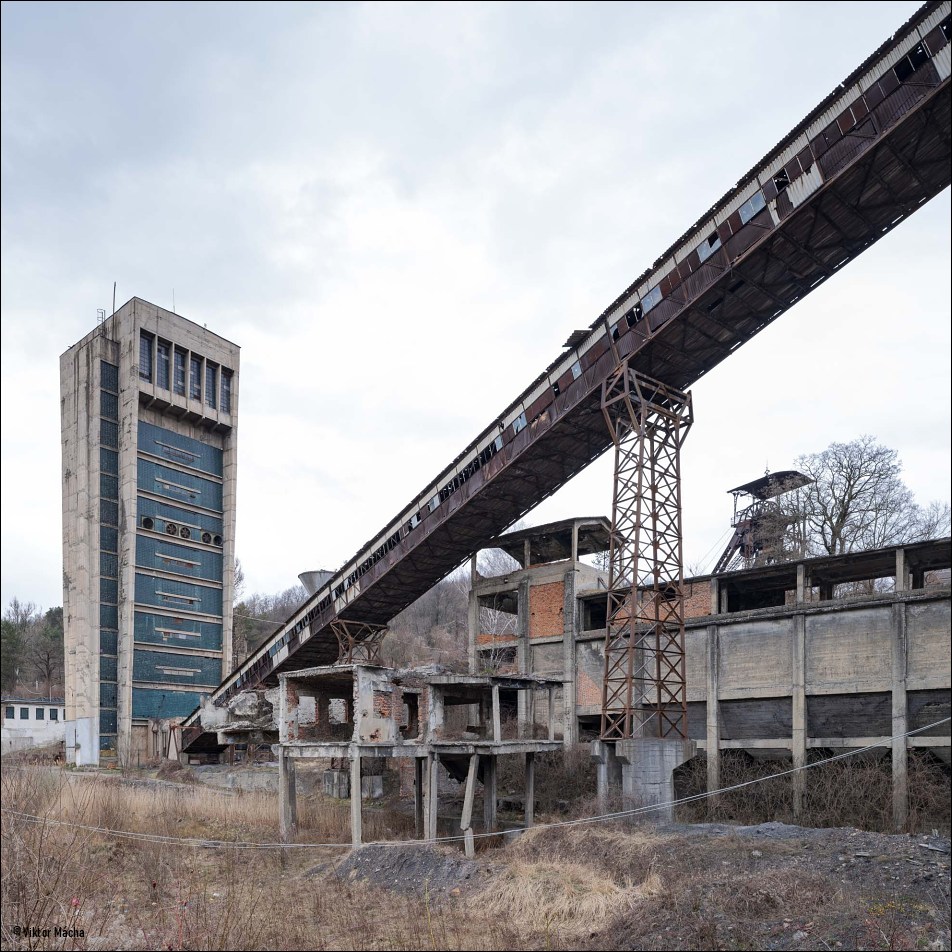
mina Vulcan
Coal mining in Vulcan, in Romania’s Jiu Valley, dates back to around 1840, when the Hoffmann brothers and Karol Maderspach began exploiting exposed coal seams. More organised mining developed in the 1880s, following the acquisition of concessions for the Arpad and Terezia mines.
Mina Vulcan was formally established in 1900, with shafts providing access to the Valea Lupului and Valea Crividiei coalfields. Pit Khorin was constructed in 1907 to serve the Crividia workings. The mine continued to expand, gaining a coal-preparation plant, a 1,200-metre funicular in 1903 and the Jiu Valley’s first power station in 1910. After wartime disruptions, reconstruction began in 1949, and production resumed in April 1951.
In 1998, the mine came under the National Hard Coal Company (CNH), following further restructuring of Romania’s mining industry. After the collapse of the Hunedoara Energy Complex in 2025, operations continued under the state-owned Complexul Energetic Valea Jiului. Today, Vulcan remains operational during a gradual transition towards closure.
In September 2026, the technical closure plans received ministerial approval. Final closure and environmental rehabilitation are scheduled for completion by 31 December 2032.
Keywords: 2026, jiu valley, valea jiului, vulcan, mina vulcan, mining, bergbau, hornictvi, industrial decay, industrial heritage, industriekultur, industrial photography, coal, coal mining
Views: 5 ×